Friday, September 26, 2025

ZUMI Introduces Lactose-free, No-sugar Milkshakes

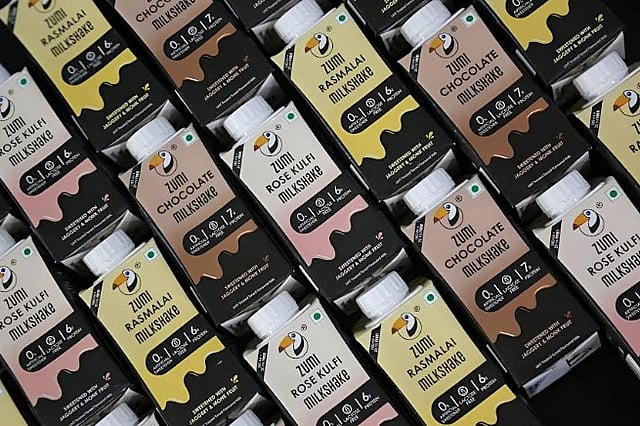
Hyderabad-based Beanery Foods, under its brand ZUMI, has launched a first-of-its-kind range of lactose-free, no refined sugar milkshakes. The clean-label beverages are crafted with monk fruit and jaggery, making them a guilt-free indulgence for health-conscious consumers and those with lactose intolerance.


Developed with mentorship and product development support from Tetra Pak through its Startup Challenge 2024, ZUMI’s shakes come in dessert-inspired flavours like Rose Kulfi, Rasmalai, and Chocolate. Each 200ml Tetra Pak pack delivers 6–7 grams of protein, ensuring both taste and nutrition.

Currently available in Bengaluru, Hyderabad, and Chennai via ZUMI’s website, Amazon, and soon on quick-commerce platforms, the brand is set to expand across more cities.

With this launch, ZUMI is redefining indulgence by combining nutrition, convenience, and exceptional taste—pioneering a new standard for healthy beverages in India.

RTD (ReadyToDrink) COCKTAILS FROM RAD BEVERAGES


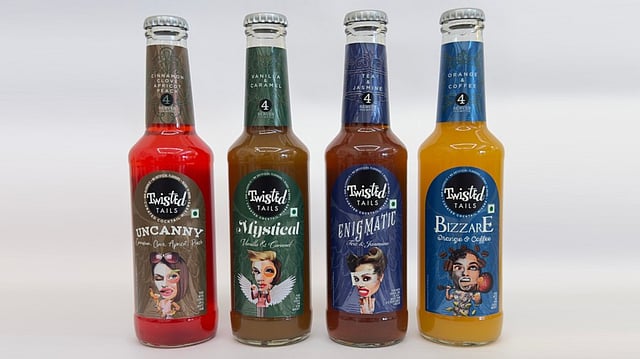
RAD Beverages has announced the launch of Twisted Tails, its new ready-to-drink (RTD) cocktail mixers brand, designed for consumers seeking convenience without compromising on quality. Crafted with natural flavors, premium ingredients, and a low-sugar content, the brand aims to provide an easy, bar-like cocktail experience at home. Twisted Tails will debut with three refreshing variants — Margarita, Mojito, and Cosmopolitan — targeting young urban consumers who enjoy experimenting with cocktails but prefer hassle-free preparation. With the RTD market witnessing significant growth in India, RAD Beverages plans to position Twisted Tails as an accessible, trendy option that complements the evolving cocktail culture in the country.


LICOR 43 BY MONIKA ALCOBEV

Monika Alcobev, India’s only publicly listed premium wine and spirits importer, has officially introduced Licor 43, the legendary Spanish liqueur from Zamora Company, into the Indian market. Crafted with a unique blend of 43 natural ingredients including botanicals, spices, and citrus fruits, Licor 43 is already enjoyed in over 80 countries worldwide. The Indian launch brings not only the classic Licor 43 Original (available in 700 ml and 1000 ml formats) but also exciting flavoured variants such as Licor 43 Chocolate and Licor 43 Crème Brûlée. Alongside these, two globally popular serving styles — the refreshing Mini Beer and the indulgent Carajillo 43 — have been introduced to enrich the cocktail experience.


As part of a broader portfolio expansion, Monika Alcobev will also import other Zamora Company brands, including Martin Miller’s Original Gin, Villa Massa Limoncello, and Amaretto. Leveraging its strong distribution network across North, West, and Southern India (particularly Karnataka, Telangana, and Tamil Nadu), the company will ensure Licor 43 reaches premium retail stores and vibrant cocktail hubs. The initial launch markets include Goa and Mumbai, with further expansion planned in East India and other regions. Positioned with the tagline “Mix Something New”, Licor 43 aims to capture the growing cocktail culture in India and establish itself as a contemporary, premium liqueur choice.

Sunday, September 21, 2025

BBA I SEM- FUNDAMENTALS OF MARKETING - UNIT III (STUDY NOTES) LATEST SYLLABUS

UNIT III


3.1 PRODUCT, PRODUCT LEVELS AND CLASSIFICATION OF PRODUCTS

1. Definition of Product

A product is anything offered to a market to satisfy the needs and wants of consumers. It can be tangible (goods like clothes, furniture) or intangible (services like banking, education). In marketing, a product is seen not just as a physical item but as a bundle of benefits that delivers value to customers.

2. Levels of Product (Philip Kotler’s Model)

Products can be understood at five levels:

1.      Core Benefit – The fundamental need or problem solved by the product.

              Example: A car provides transportation.

2.      Basic Product – The essential features that allow the product to function.

              Example: Engine, wheels, seats in a car.

3.      Expected Product – The set of attributes buyers normally expect.

              Example: Air conditioning, mileage, safety features in a car.

4.      Augmented Product – Additional benefits or services that exceed customer expectations.

              Example: Warranty, free servicing, GPS navigation.

5.      Potential Product – Future possibilities and innovations that can add value.

              Example: Self-driving or electric features in cars.


3. Classification of Products

Products are broadly classified into consumer products and industrial products:

A) Consumer Products (for personal use)

1.      Convenience Products

o    Low-priced, frequently bought, little effort in purchase.

o    Examples: Soap, toothpaste, snacks.

2.      Shopping Products

o    Purchased less frequently, involve comparison of quality, price, style.

o    Examples: Clothes, electronics, furniture.

3.      Specialty Products

o    Unique, expensive, strong brand preference, buyers make special effort.

o    Examples: Luxury cars, branded jewelry.

4.      Unsought Products

o    Not actively sought by consumers, bought only when needed.

o    Examples: Insurance, medical services, fire extinguishers.

B) Industrial Products (used in production)

1.      Raw Materials – Natural products like cotton, iron ore, crude oil.

2.      Capital Items – Long-term assets like machinery, buildings.

3.      Supplies and Services – Short-term goods and services like office stationery, repair services.

4.      Components and Parts – Used in making final products (e.g., microchips for phones).


3.2 PRODUCT LIFE CYCLE (PLC) & STRAGTEGIES

1. Meaning of PLC

The Product Life Cycle (PLC) is the concept that every product passes through a series of stages from its introduction in the market to its decline.It helps marketers understand sales patterns, profits, and the strategies needed at each stage.

2. Stages of Product Life Cycle

a) Introduction Stage

Features:

a)       High costs of production and promotion.

b)       Sales grow slowly.

c)       Profits are usually negative or very low.

Strategies:

a)       Heavy advertising and promotional campaigns to create awareness.

b)       Skimming pricing (high price) or penetration pricing (low price).

c)       Focus on building brand identity and distribution network.

b) Growth Stage

Features:

a)       Sales increase rapidly.

b)       Profits start to rise.

c)       Competitors enter the market.

Strategies:

a)       Improve product quality and add features.

b)       Expand distribution channels.

c)       Competitive pricing to gain market share.

d)       Strong promotion to differentiate from competitors.

c) Maturity Stage

Features:

a)       Sales reach peak and market becomes saturated.

b)       Intense competition.

c)       Profit margins may decline.


Strategies:

a)       Product modification (new versions, styles, packaging).

b)       Price reductions and discounts to attract buyers.

c)       Strong brand loyalty programs.

d)       Explore new markets or customer segments.

d) Decline Stage

Features:

a)       Sales and profits decline sharply.

b)       Market shrinks as new substitutes or innovations replace the product.

Strategies:

a)       Reduce promotional expenses.

b)       Harvesting (maximize short-term profits while phasing out).

c)       Discontinue the product if unprofitable.

d)       Sell to niche markets that still demand the product.

3. Importance of PLC

·         Helps in planning marketing strategies.

·         Guides decisions about product innovation and discontinuation.

·         Helps manage resources effectively across product portfolio.


3.3 PRICING, OBJECTIVES, STRATEGIES, AND PRICING METHODS

1. Pricing

·         Pricing is the process of determining the value a customer pays to acquire a product or service.

·         It directly affects revenue, demand, competition, and overall market position.

·         Price is the only element of the marketing mix (4Ps) that generates revenue, while others create cost.

2. Objectives of Pricing

Firms set prices with different goals in mind, depending on their market situation:

  • Profit Maximization: The most common objective, where the firm aims to set a price that gives maximum profit in the long run.
  • Sales Maximization: Sometimes companies prefer higher sales volume, even with lower margins, to build market share.
  • Market Penetration: New products often enter with low prices to attract customers quickly and discourage competitors.
  • Market Skimming: New and innovative products may start with high prices to recover R&D costs and attract status-conscious buyers.
  • Survival Objective: During intense competition or crisis (like recession), businesses may price just enough to stay afloat.
  • Customer Value & Loyalty: Setting fair prices to build trust and maintain long-term relationships with customers.

3. Pricing Strategies

Marketers adopt different approaches depending on their goals:

  1. Penetration Pricing – Keeps price low initially to gain quick market entry and higher sales volume (common in FMCG).
  2. Price Skimming – Sets a high price at launch, then reduces it over time (common in electronics and smartphones).
  3. Competitive Pricing – Adjusts prices according to competitor levels, useful in markets with many alternatives.
  4. Value-based Pricing – Focuses on what the customer thinks the product is worth, rather than its production cost.
  5. Psychological Pricing – Uses consumer psychology (e.g., ₹99 instead of ₹100, or premium packaging with higher price).
  6. Premium Pricing – High price to highlight exclusivity, quality, or brand status (luxury watches, designer clothing).
  7. Dynamic Pricing – Price fluctuates with demand and supply (airlines, hotels, ride-sharing apps).

4. Pricing Methods

These are the practical ways companies calculate price:

a.        Cost-Plus Pricing: Cost of production + fixed profit margin. Simple but ignores demand and competition.

b.       Mark-up Pricing: Price set by adding a percentage to cost, widely used in retail.

c.        Break-even Pricing: Price calculated to cover only the cost, without profit; useful in new product launches.

d.       Target Return Pricing: Designed to achieve a specific return on investment (ROI).

e.        Perceived Value Pricing: Relies on customer’s willingness to pay based on perceived benefits (common in branded goods).

f.        Auction or Bid Pricing: Price decided by bidding (common in construction projects, government contracts).

5. Factors Influencing Pricing

Internal Factors:

  • Cost of Production: The minimum price must cover cost, otherwise the firm makes a loss.
  • Company Objectives: A firm focusing on premium branding will price differently from one focused on mass sales.
  • Product Life Cycle Stage: New products may be priced higher (skimming) or lower (penetration), while older products may need discounts.
  • Marketing Mix Integration: Price must fit with promotion, product quality, and distribution strategy.

External Factors:

  • Demand Conditions: Higher demand often allows higher pricing, while low demand forces discounts.
  • Customer Perception: If consumers see the product as high-value, they accept a higher price.
  • Competition: Strong competitors limit how high a company can price.
  • Government Regulations: Taxes, price ceilings, or anti-profiteering laws affect pricing freedom.
  • Economic Environment: Inflation, recession, or exchange rate fluctuations influence pricing decisions.
  • Channel Members: Wholesalers, retailers, and e-commerce platforms often demand margins, affecting final consumer price.

BBA I SEM- FUNDAMENTALS OF MARKETING - UNIT II (STUDY NOTES) LATEST SYLLABUS


UNIT II

2.1 MARKETING ENVIRONMENT

1. Meaning of Marketing Environment

·         The marketing environment refers to all external and internal factors that affect a company’s ability to build and maintain successful relationships with customers.

·         It includes forces that are controllable (like company policies, marketing strategies) and uncontrollable (like economic conditions, competitors, social trends).

·         Marketers must constantly monitor this environment to adapt strategies and remain competitive.

2. Components of Marketing Environment

The marketing environment can be studied under two categories:

A) Micro Environment (Internal Environment)

These are factors within or directly connected to the company that influence marketing decisions:

1.      Company (Organization itself) – Structure, policies, culture, and resources.

2.      Suppliers – Provide raw materials and components; shortages or delays affect marketing.

3.      Marketing Intermediaries – Wholesalers, retailers, distributors, logistics partners who help in product movement.

4.      Competitors – Other businesses offering similar products; their pricing, promotion, and innovation shape strategies.

5.      Customers – The target audience (individuals, businesses, government, international markets).

6.      Publics – Any group that has interest in or impact on the company (media, financial institutions, local communities).


B) Macro Environment (External Environment)

These are larger forces beyond the company’s direct control. A famous framework to study these is PESTLE Analysis:

1.      Political Factors

o    Government stability, taxation policies, trade regulations, foreign policies.

o    Example: Ban on certain products (like plastics) forces firms to adapt.

2.      Economic Factors

o    Inflation, interest rates, economic growth, employment levels, disposable income.

o    Example: In recession, people cut down on luxury goods and focus on essentials.

3.      Social and Cultural Factors

o    Lifestyles, values, traditions, demographics, education, health consciousness.

o    Example: Rising demand for organic food due to health awareness.

4.      Technological Factors

o    Innovations, digitalization, automation, online platforms.

o    Example: Growth of e-commerce and digital marketing.

5.      Legal Factors

o    Consumer protection laws, labor laws, environmental laws, intellectual property rights.

o    Example: Misleading advertisements may face legal penalties.

6.      Environmental Factors

o    Sustainability issues, climate change, eco-friendly products, CSR expectations.

o    Example: Pressure to reduce carbon footprint and use green packaging.

3. Importance of Marketing Environment

·         Helps identify opportunities and threats – spotting trends early gives a competitive edge.

·         Assists in strategy formulation – marketing plans can be aligned with social, economic, and legal conditions.

·         Improves adaptability – companies that monitor their environment can quickly respond to changes.

·         Customer satisfaction – understanding customer needs influenced by culture, economy, and technology leads to better products.

·         Risk reduction – awareness of government policies or competitor moves reduces uncertainty.


2.2 MARKET SEGMENTATION

1. Meaning

Market segmentation is the process of dividing a broad market into smaller, more manageable groups of consumers who share similar needs, preferences, or characteristics. Instead of treating all customers the same, businesses target each segment with tailored products, promotions, and pricing.


2. Importance of Market Segmentation

a)       Better understanding of customers – businesses know exactly what different groups want.

b)       Efficient use of resources – marketing budget is spent more wisely on the right audience.

c)       Competitive advantage – helps design unique offers that differentiate from competitors.

d)       Customer satisfaction & loyalty – personalized strategies improve relationships.

e)       Improves profitability – focusing on profitable segments maximizes returns.


3. Bases of Consumer Market Segmentation

There are four main bases for segmenting consumer markets:

A) Geographic Segmentation

·         Dividing markets based on location.

·         Examples: Region (north/south/east/west), city size, rural vs. urban, climate (hot/cold).

·         E.g., selling snow boots in colder regions vs. sandals in tropical regions.

B) Demographic Segmentation

·         Most common and measurable base.

·         Variables: Age, gender, income, occupation, education, family size, religion, nationality.

·         E.g., luxury brands target high-income groups; toys target children.

C) Psychographic Segmentation

·         Based on lifestyle, personality, interests, values, social class.

·         E.g., gyms target health-conscious lifestyle groups; adventure brands target risk-taking personalities.

D) Behavioral Segmentation

·         Based on customer behavior toward a product.

·         Variables:

o    Benefits sought (quality, price, convenience)

o    Usage rate (light, medium, heavy users)

o    Brand loyalty (loyal vs. switchers)

o    Occasion-based (festivals, weddings, holidays).

·         E.g., chocolate sales increase during Valentine’s Day (occasion-based).


2.3 TARGETING

After segmentation, the next step in marketing is Targeting. Targeting means evaluating each market segment and selecting one or more segments to serve with specific marketing strategies. It ensures that the company’s efforts are directed toward the most profitable and suitable customer groups.

In simple terms, targeting is about deciding "which customers" you want to focus on and tailoring your products, pricing, promotion, and distribution to meet their needs effectively.

Importance of Targeting

a)       Helps in efficient use of resources by focusing only on specific groups instead of the whole market.

b)       Increases customer satisfaction, since marketing messages and products are tailored to their needs.

c)       Improves competitive advantage, as the company can position itself better in the chosen market.

d)       Supports better brand loyalty and long-term profitability.


Key Factors to Consider in Targeting

When selecting target markets, marketers evaluate each segment using several factors:

1.      Segment Size and Growth

o    Is the segment large enough to be profitable?

o    Is it growing, shrinking, or stable?

o    Example: Targeting urban millennials for online food delivery because the segment is rapidly growing.

2.      Segment Attractiveness

o    How competitive is the segment?

o    Are there too many strong competitors, substitutes, or powerful suppliers/distributors?

o    Example: Entering the smartphone market is tough due to high competition from Apple and Samsung.

3.      Company Objectives and Resources

o    Does the company have the resources (financial, technical, human) to serve the segment?

o    Does the segment align with the firm’s mission and vision?

4.      Profitability Potential

o    Will the segment bring enough revenue compared to the costs of serving it?

5.      Accessibility

o    Can the company reach and serve the segment effectively through distribution and communication channels?

6.      Differentiability

o    The segment must be distinct and respond differently to marketing efforts compared to other groups.

7.      Compatibility

o    Is the segment culturally, socially, and ethically suitable for the brand?

o    Example: A premium brand may not target low-income groups as it doesn’t align with its image.

2.4 POSITIONING

Meaning

Positioning refers to how a brand or product is placed in the minds of consumers compared to competitors.
In simple terms, it answers:
👉 “What do we want customers to think when they hear our brand name?”

For example:

·         Volvo = Safety

·         Apple = Innovation & Premium Quality

·         McDonald’s = Fast, Affordable Food

So, Positioning = creating a unique image, identity, and perception of the product in the target customer’s mind.

Importance of Positioning

1.      Differentiation – helps a product stand out in a crowded market.

2.      Brand Image – builds strong associations (luxury, trust, affordability, etc.).

3.      Customer Loyalty – people return to brands that occupy a clear position in their mind.

4.      Efficient Marketing – messages and campaigns become focused.

5.      Competitive Advantage – makes it hard for competitors to copy or replace.


2.5 POSITIONING METHODS

Companies can position their products in different ways depending on their target market and goals:

1.      Positioning by Product Attributes/Features

o    Highlighting specific characteristics like quality, durability, style, or technology.

o    Example: Dyson vacuum cleaners – advanced technology and suction power.

2.      Positioning by Benefits/Value Offered

o    Focusing on the benefit the customer gets.

o    Example: Sensodyne toothpaste – relief from tooth sensitivity.

3.      Positioning by Price/Quality

o    Either as a high-quality premium brand OR as a low-cost affordable option.

o    Example: Rolex – premium quality; Walmart – low price leader.

4.      Positioning by Use or Application

o    Highlighting the specific usage of the product.

o    Example: Gatorade – sports and energy drink for athletes.

5.      Positioning by Product Class/Category

o    Comparing against or creating a new product class.

o    Example: Margarine positioned as a healthier alternative to butter.

6.      Positioning by Competitor

o    Directly comparing with rivals to stand out.

o    Example: Pepsi vs. Coca-Cola advertisements.

7.      Positioning by Cultural Symbols

o    Using well-known symbols, icons, or cultural values.

o    Example: Maharaja Mac by McDonald’s in India (localized positioning).